
Telling the Bees: The Folklore, History and Science Behind an Ancient Beekeeping Tradition

Updated: Aug 27
Why Beekeepers Practised the Telling the Bees Tradition.

Introduction
For as long as human beings have lived beside honeybees, they have struggled to decide what, exactly, bees are.
They are insects, certainly. They are livestock, in one practical sense. They are agricultural partners, in another. Yet across centuries of European and North American tradition, bees were also treated as something more difficult to classify: as witnesses, as household dependants, as moral barometers, and sometimes as creatures standing very near the boundary between the ordinary world and the unseen one. Out of that uneasy and reverent intimacy emerged one of the most striking customs in the history of beekeeping: “telling the bees.”
The tradition of telling the bees was once common across rural Europe and North America, where beekeepers believed colonies had to be informed of important events such as deaths, marriages, and changes in household leadership.
The Tradition of “Telling the Bees”
The custom is simple in outline and haunting in effect. When a death occurred in the household, the beekeeper, or another member of the family, would go out to the hives and tell the bees what had happened. In many traditions this was not limited to deaths alone: bees might also be informed of marriages, births, departures, returns, or changes in property and household authority. In some accounts the hive was tapped before the announcement; in others it was draped in black crepe, turned slightly, or ceremonially offered a portion of the funeral meal. If the bees were not informed, misfortune was expected. They might sicken, stop producing, swarm away, or die. The idea appears in regional folklore from Britain and Ireland, in continental Europe, and later in rural North America; by the nineteenth century it had become familiar enough in New England to be immortalised in John Greenleaf Whittier’s 1858 poem Telling the Bees.
At first glance, the ritual appears to belong wholly to the world of superstition. Bees do not understand English, Welsh, German, or any other human language. They cannot comprehend a death announcement in the semantic sense that a human mourner can. Yet to leave the matter there is to miss the real intellectual richness of the tradition of telling the bees. Folklore often survives not because it is biologically correct in a literal sense, but because it offers a persuasive explanation for repeated observations. A ritual may be symbolically false and empirically sticky. Telling the bees is one of those customs in which close practical observation, household grief, agricultural dependency, and inherited cosmology seem to have fused into a single act. The result is not scientific beekeeping, but neither is it mere nonsense. It is an interpretive system built around real patterns: bees truly do respond to vibration; they truly do learn and respond to repeated sensory cues; and, in traditional systems of husbandry, colonies really could decline quickly after the loss of an attentive keeper.
To understand why this custom persisted so widely, one must examine not only bee biology, but also the cultural place bees occupied within older rural life. Bees were never ordinary stock. A cow might be owned, a sheep counted, a horse traded; but bees were often described, spoken to, and ceremonially acknowledged as though they belonged to the household in a different register. Folklore collections from Britain record precisely this moral and domestic status. In one North Riding Yorkshire tradition, bees had to be told of the death of their owner and of the coming of the successor; they were even given portions of the funeral repast, and hives might be hung with mourning cloth. Such details are too specific, too recurrent, and too geographically distributed to be dismissed as literary invention alone. They reflect a widespread vernacular conviction that bees participated, in however mysterious a way, in family continuity and household order.
Bees in the Cultural Imagination
That conviction did not emerge from nowhere. The symbolic history of bees in the West is very old. Ancient literature and later folklore repeatedly treated bees and honey as substances standing close to sanctity, prophecy, or death. Hilda Ransome’s classic study The Sacred Bee in Ancient Times and Folklore framed bees as creatures entangled with some of the earliest religious and funerary traditions, and later classical scholarship has continued to note the persistence of associations between bees, the soul, sacred speech, and the world of the dead in Greek and Roman thought. That does not prove that the specific custom of “telling the bees” descends in a direct line from antiquity; the evidentiary chain is too thin for such certainty. But it does show that bees entered European tradition already burdened with unusual symbolic weight. They were not blank agricultural units onto which later peasants projected sentiment. They were, from very early on, culturally charged organisms.
This deep symbolic background matters because customs rarely persist on utility alone. A purely practical habit might vanish when conditions changed. A ritual attached to cosmology survives more stubbornly. In the case of bees, utility and symbolism reinforced one another. Honey and wax were economically valuable. Beeswax lit churches and homes. Honey sweetened food, preserved substances, and entered medicinal and ritual use. Colonies mattered materially. But they also seemed uncannily social: collective, industrious, communicative, loyal to place, ordered around a sovereign centre. For householders accustomed to reading moral structure in nature, bees looked less like vermin than like a disciplined polity lodged in a wooden box at the edge of domestic life. That made them especially ready recipients of ritual speech.
Whittier’s Telling the Bees captures the emotional power of the custom precisely because it assumes that readers already recognise the act. The poem does not explain the tradition from first principles; it dramatizes it. The hives are “draped…with a shred of black,” and the chore-girl sings to them: “Stay at home, pretty bees, fly not hence! / Mistress Mary is dead and gone!” The pathos depends on more than quaintness. The bees are not decorative background. They are addressed as beings whose departure would compound bereavement, and whose remaining would signify a fragile continuity after death. In literary terms, the custom functions as a device for showing how grief radiates outward through the farm, implicating not only kin and servants, but animals, structures, and labour. The household itself mourns.
Vibrational Communication in Honeybee Colonies

Yet literature, however beautiful, should not tempt us into treating the custom as only metaphor. Beekeepers likely continued the practice because it resonated with things they really saw. The first of these is the most straightforward: bees are exquisitely sensitive to vibration.
Honeybee colonies are built around forms of communication that work in darkness, crowding, and dense physical contact. Much of what happens in a hive is not primarily visual. Bees use chemical cues, touch, airborne signals, and substrate-borne vibrations. The celebrated waggle dance is the most famous example of their communicative sophistication, but it is only one part of a larger sensory world in which motion and vibration matter enormously. Reviews of waggle-dance neuroethology describe a signalling system involving low-frequency abdominal movements and higher-frequency wing-generated vibrations, while earlier work on comb vibrations showed that dancing bees produce signals in a frequency range relevant to the bees’ vibration-sensitive organs. The honeybee subgenual organ, located in the leg, is especially important for detecting substrate vibrations, and bees also use antennal mechanisms, including Johnston’s organ, to detect airborne components of mechanical signals. In short, a hive is a mechanical world as much as a chemical one.
This point is crucial for understanding the ritual form of telling the bees. Historical accounts often mention not only speech, but also knocking or tapping on the hive before the announcement. From a behavioural standpoint, that action is not empty theatre. It produces a disturbance the colony can detect. Bees would not understand the meaning of the spoken words that followed, but they would register that something unusual had happened at the hive wall or comb. An observer who saw the colony alter its acoustic or locomotor state after such tapping could easily interpret the sequence as conversational: first the announcement, then the bees’ reaction. What modern ethology separates into a sensory stimulus and an insect response, folklore could fold into the more human story that the bees had been respectfully informed.
Sensory Perception and Vibration Detection
One should not overstate the case. There is no evidence that funeral tapping reproduces any natural in-hive signal in a way that causes bees to interpret bereavement. That would be fanciful. But there is strong evidence that bees live in a perceptual environment where small mechanical disturbances matter. Indeed, experimental work has shown that artificially generated vibrational substrate stimuli can alter colony activity, reinforcing the broader principle that bees are not indifferent to humanly produced vibrations. The old custom may therefore be biologically wrong in its explicit theory, bees were not being “told” in the linguistic sense, while remaining grounded in a correct intuition that bees are accessible through the material language of the hive itself.
Learning and Memory in Honeybees
The second factor is subtler but perhaps even more persuasive: bees learn.
Honeybees have long served as model organisms for the study of learning, memory, and sensory integration. Reviews in cognitive science and behavioural neuroscience emphasise that, despite a brain of roughly under a million neurons, honeybees display an impressive repertoire of associative learning, olfactory discrimination, spatial memory, and even forms of non-elementary or concept-like processing in experimental settings. They can associate odours with reward, learn visual rules, discriminate patterns, and modify behaviour according to experience. Their reliance on olfaction is especially pronounced: bees use odours in foraging, navigation, social interaction, and colony regulation, and modern reviews of honeybee olfaction stress how central smell is to their ecology and memory formation.
This does not mean bees “recognise” a beekeeper in the personal, mammalian sense of knowing an individual as a biographical person. That would be too anthropomorphic and too loosely evidenced. But it does mean that a colony can become accustomed to highly regular combinations of sensory cues: the smell of smoke, leather gloves, wool clothing, sweat, propolis-disturbed air, footfall vibrations, the timing and rhythm of inspections, the opening of the hive, the presentation of feed, the placement of supers, the general disturbance signature of a familiar operator. Bees do not need to understand a human mind to learn the environmental pattern produced by that human’s repeated presence.
From this perspective, one can see how bereavement in a beekeeping household might become legible at the hive even without any ritual announcement. If the principal keeper falls ill, becomes absent, or dies, the sensory routine around the apiary changes. Inspections may cease. Feeding may be delayed. Handling style may differ when another family member takes over. The smell of familiar clothing and smoke may be replaced by another combination. The timing of visits may alter. To modern science, these are shifts in the hive’s sensory environment. To a household already predisposed to imagine bees as socially aware, they could seem like proof that the bees had noticed the loss. That interpretive move becomes even easier if the transition in management coincides with a period of visible colony stress.
The Ecological Consequences of Losing a Beekeeper
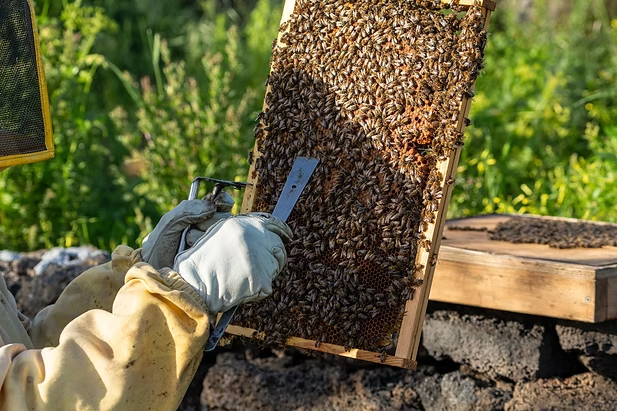
The third factor is the most practical and, in many ways, the strongest: colonies often fare badly when attentive management stops.
Modern beekeeping manuals still emphasise regular inspection for queen status, population strength, food stores, and disease or pest problems. Extension guidance describes routine checks as basic to preventing or mitigating issues, and seasonal management recommendations stress that swarm control, space management, and food assessment are central to successful colony husbandry. Swarming, in particular, can significantly reduce the productivity and strength of a colony if not managed according to the beekeeper’s goals; extension sources note that colonies which swarm may fail to recover in time to produce a honey crop. Likewise, food shortages, disease, or neglected pest problems can weaken or kill colonies if nobody is watching and intervening.
In earlier centuries, before the modern understanding of pathogens and before contemporary treatments, the dependency of managed bees on a competent keeper could be even more dramatic. A dead or incapacitated beekeeper did not merely leave an emotional gap; he or she left an operational one. Swarm cells went unnoticed. Stores were not checked. Winter feed might not be given. A diseased colony could deteriorate beyond recovery. Colonies that lost their keeper and then declined would have seemed to confirm, again and again, the old saying that bees must be informed of the death, or else they would perish. In this way, folklore and husbandry become almost impossible to disentangle. The belief may have encoded a practical truth in symbolic form: when the household changes, the apiary must not be neglected.
Ritual as Ecological Practice
There is a further nuance here. The custom may not only have explained colony decline after bereavement; it may also have helped prevent it. A ritual obliges action. If a family believes the bees must be told, someone must go to the hives immediately after a death. That visit functions as a ceremonial transfer of attention. The bees are not forgotten in the chaos of mourning. The new keeper, or acting keeper, approaches the hive, acknowledges the changed household, and implicitly assumes responsibility. In that sense the tradition may have been adaptive, not because bees understood words, but because humans used ritual to ensure continuity of care. Folklore often preserves practical wisdom in symbolic dress; here, the dress is funerary black, but the wisdom is managerial succession. This is partly an inference rather than a directly documented historical claim, but it fits well with the behavioural and husbandry evidence.
Bees as Members of the Household
It is also important to notice what sort of relationship the custom imagines between human beings and bees. Telling the bees is not a command. It is notification. The bees are not ordered into submission; they are informed with courtesy. That matters. The ritual assumes a household polity in which bees possess standing. They do not rule, but they must be acknowledged. This sits comfortably alongside a much broader European tendency to treat bees as unusually dignified among insects, clean, industrious, provident, even half-civilised. Such attitudes made bees especially suitable objects of respectful speech. In many traditions, one does not merely use bees; one keeps faith with them.
The Survival of the Tradition

The persistence of the tradition into modern public life shows how emotionally durable that relationship remains. When Queen Elizabeth II died in September 2022, media reports noted that the royal beekeeper informed the palace bees of her death and of King Charles III’s succession. Whether or not the act had any effect on the bees is beside the point. The gesture resonated because the old logic still feels intelligible: bees belong to the continuity of a place, and they must be included when the household order changes. The fact that this seemed charming rather than absurd to so many modern observers tells us something important. The custom survives because it satisfies an enduring human desire to place mourning within the whole ecology of domestic life.
Conclusion
What, then, should we conclude about the factuality of “telling the bees”?
Not that the bees understood bereavement as narrated to them. That is unsupported. Not that the custom can be reduced to a crude behavioural misunderstanding, either. That would be too simple, and unfair to the complexity of rural knowledge. A better conclusion is that the tradition emerged at the intersection of at least four realities.
First, bees have long occupied an unusually sacred and symbolically charged place in European imagination. Second, bees are genuinely responsive to vibration and disturbance at the hive, making ritualised contact biologically perceptible to the colony. Third, bees are highly capable learners, able to associate repeated sensory patterns with important events in their environment. Fourth, the loss of a beekeeper historically could produce rapid and visible changes in colony condition if management lapsed. Together, these realities made it entirely plausible, emotionally, practically, and observationally, that bees should be informed when the life of the household changed.
Seen this way, telling the bees is not a relic to be laughed away, nor a mystical truth to be defended literally. It is something more interesting: a cultural compression of behavioural ecology, grief ritual, and domestic ethics. It reflects a world in which people lived close enough to bees to notice subtle changes, depended enough on them to care deeply about their condition, and thought symbolically enough to convert observation into custom. Its durability lies in that fusion. The bees do not speak our language, but neither are they mute presences in the farmyard. They vibrate, dance, remember, orient, recruit, swarm, starve, flourish, and fail in ways that attentive humans have always tried to interpret. The old ritual was one such interpretation, wrong in mechanism, perhaps, but profoundly right in recognising that bees are not indifferent things. They are living societies whose fortunes are bound, often intimately, to our own.
And perhaps that is why the custom still moves people. To tell the bees is to refuse the idea that death affects only human minds. It is to step outside, in the aftermath of loss, and announce to the living world that the order of the house has changed. Whether the bees understand the words is almost irrelevant. The speaker understands what is being done. The act says that care must continue, that continuity must be enacted, and that even now, especially now, the hive must not be abandoned.

Selected References
Ai, H., Okada, R., Sakura, M., Wachtler, T. & Ikeno, H. (2019). ‘Neuroethology of the Waggle Dance: How Followers Interact with the Waggle Dancer and Detect Spatial Information’. Insects, 10(10), 336. DOI: 10.3390/insects10100336.
Deisig, N., Lachnit, H., Giurfa, M. & Hellstern, F. (2001). ‘Configural Olfactory Learning in Honeybees: Negative and Positive Patterning Discrimination’. Learning & Memory, 8(2), 70–78. DOI: 10.1101/lm.8.2.70.
Menzel, R. & Giurfa, M. (2001). ‘Cognitive Architecture of a Mini-Brain: The Honeybee’. Trends in Cognitive Sciences, 5(2), 62–71. DOI: 10.1016/S1364-6613(00)01601-6.
Paoli, M. & Galizia, G.C. (2021). ‘Olfactory Coding in Honeybees’. Cell and Tissue Research, 383, 35–58. DOI: 10.1007/s00441-020-03385-5.
Whittier, J.G. (1858). ‘Telling the Bees’. The Atlantic Monthly, 2(13), 722–724.
Ransome, H.M. (1937). The Sacred Bee in Ancient Times and Folklore. London: George Allen & Unwin.
Food and Agriculture Organization of the United Nations (FAO), Apimondia, Chinese Academy of Agricultural Sciences (CAAS) & Istituto Zooprofilattico Sperimentale del Lazio e della Toscana (IZSLT) (2021). Good Beekeeping Practices for Sustainable Apiculture. FAO Animal Production and Health Guidelines No. 25. Rome: FAO. DOI: 10.4060/cb5353en.
Sanford, M.T. (2003). Beekeeping: Florida Bee Botany and Management. University of Florida IFAS Extension. [Useful supporting guidance on colony management and practical beekeeping.]
Caron, D.M. & Connor, L.J. (2013). Honey Bee Biology and Beekeeping. Revised edition. Kalamazoo, Michigan: Wicwas Press. [Supporting reference for colony inspection, seasonal management, swarming and general honey bee biology.]
Winston, M.L. (1987). The Biology of the Honey Bee. Cambridge, Massachusetts: Harvard University Press. [Supporting reference for colony organisation, worker behaviour, communication and honey bee biology.]
Seeley, T.D. (1995). The Wisdom of the Hive: The Social Physiology of Honey Bee Colonies. Cambridge, Massachusetts: Harvard University Press. [Supporting reference for colony organisation, communication, foraging and collective behaviour.]
Seeley, T.D. (2010). Honeybee Democracy. Princeton, New Jersey: Princeton University Press. [Supporting reference for swarming, nest-site selection and collective decision-making.]

Wow! Amazing thank you